Does Flex Seal Work? An Honest Review Using the Company’s Own Specs
In this review
Everybody’s seen the commercials: a boat with a screen-door bottom, a bucket that holds water after one coat. So does Flex Seal work? Yes, for the jobs it’s built for. It’s a solid consumer patch for small leaks, gutters, rain barrels and the odd crack in a trailer roof. It’s not a replacement for a professional waterproofing or protective coating, and the company’s own FAQ says as much once you read the fine print. We sell and review industrial coatings, so we’ve got a bias. That’s why this review leans on Flex Seal’s published specs, and tells you where it’s a good buy and where you’ll be redoing the job.
What Flex Seal actually is
“Flex Seal” is really a product family. The two you’ll run into most:
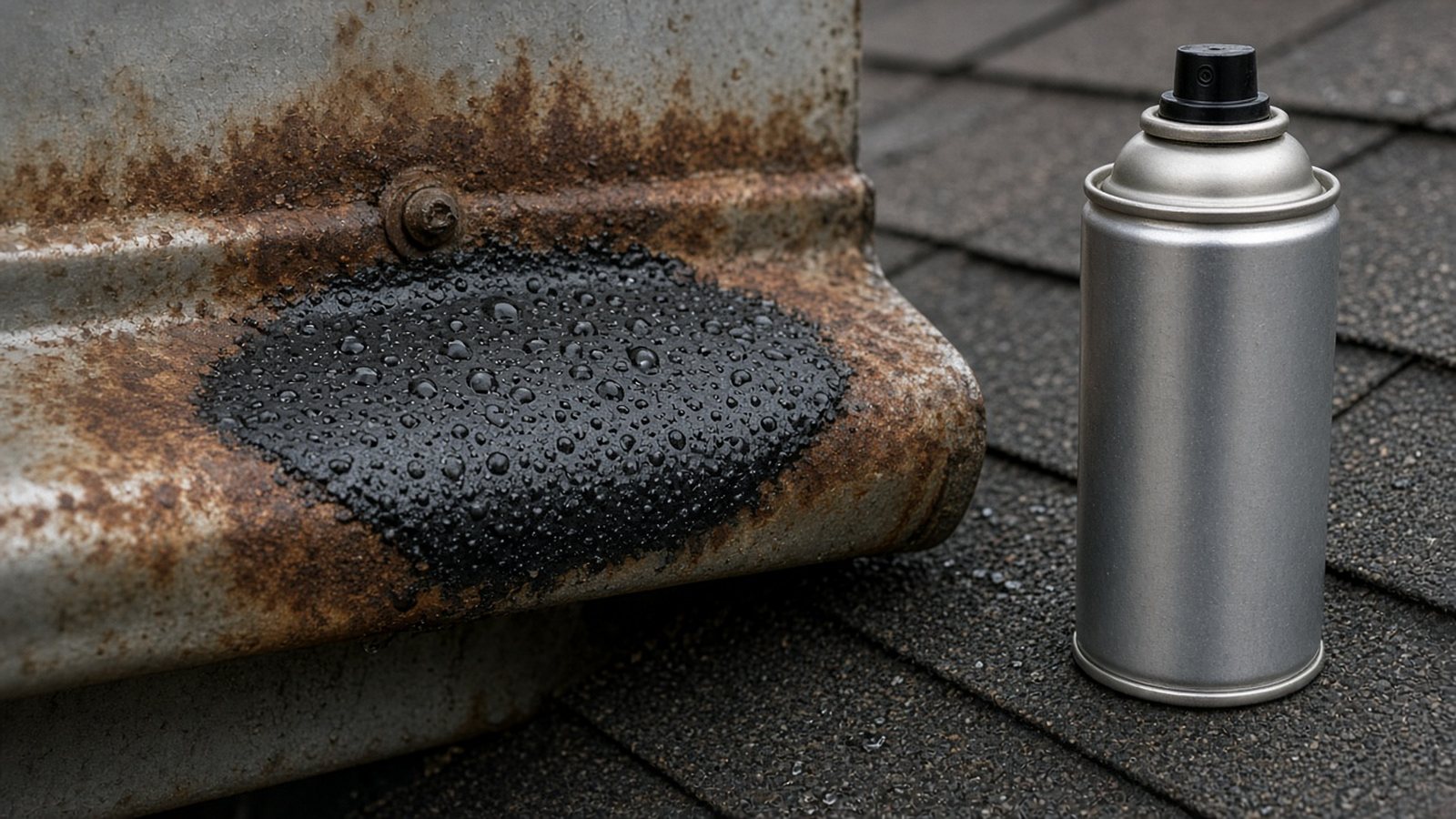
- Flex Seal Spray, the aerosol. It sprays out thick, works into cracks and dries into a rubbery, flexible coating.
- Flex Seal Liquid, a thicker rubberized liquid that you brush, roll, dip or pour.
There’s also Flex Tape, Flex Paste, Flex Glue and a list of spin-offs. Everything below comes from the manufacturer’s official Flex Seal FAQ, unless we say otherwise.
Does Flex Seal work? The specs say
| Spec | Flex Seal Spray | Flex Seal Liquid |
|---|---|---|
| Apply at surface temperature | 0 to 100°F | 32 to 120°F |
| Service range once cured | -20 to 140°F | -80 to 350°F |
| Wet surfaces | Emergency use only; reapply when dry | Best on clean, dry surface; heavy rain can wash it off |
| Pressure | Normal hydrostatic pressure like rainwater; not extreme pressure | Varies with surface and conditions; test first |
| Coverage | Up to 12 sq ft per 14 oz can; up to 15 sq ft per MAX can | Up to 150 sq ft per gallon |
| Paintable | Yes, once dry | Not with most traditional paints |
| Foot traffic | Not stated in the FAQ | Not recommended underfoot |
| Food contact | Not stated in the FAQ | Not approved for use around food; OK in rain barrels once cured |
On how long it lasts, the company says “many people have found Flex Seal will last for years” depending on environment, coats and maintenance. That’s a testimonial, not a test result, and the FAQ doesn’t give an abrasion, tensile or UV rating.
Where Flex Seal works well
Read those specs and a clear picture forms. Flex Seal is good at:
- Small, low-pressure leaks. Gutter seams, downspout joints, a pinhole in a trash can, a cracked flower pot.
- Stopgap repairs. A drip on a camper seam or a leaky shed roof until you can fix it properly.
- Rain barrels. The company says Liquid is fine on rain barrels once cured.
- Odd shapes. Spray gets into corners and around fasteners where tape won’t sit flat.
- Cosmetic touch-ups. The Spray can be painted once dry, which helps on visible surfaces.
For those jobs, it’s cheap, easy to find and quick. That’s a fair trade.
Where it falls short
The same FAQ draws the limits:
- Foot traffic. Flex Seal Liquid isn’t recommended underfoot. That rules out decks, balconies, floors and truck beds.
- Pressure. Spray handles rainwater-level pressure, not more. That rules out pressurized pipes and below-grade walls with water pushing in. Our foundation waterproofing guide covers what those jobs need.
- Food and drinking water. Liquid isn’t approved for use around food.
- Fuel. The company doesn’t recommend it for gasoline tanks or other flammable liquids.
- Hot surfaces. Spray is only rated to 140°F once cured, which a dark roof in summer can approach.
- Large areas. At up to 12 to 15 square feet per aerosol can, a roof or trailer gets expensive fast and hard to coat evenly.
There’s also the surface prep issue. Any coating fails if it’s put on dirty, oily or wet surfaces, and a lot of bad Flex Seal results come down to spraying over grime. The product can’t fix that.
Will Flex Seal work for your job?
Answer four questions. The checker uses the FAQ limits above to give a verdict and a rough can count.
Flex Seal job checker
Coverage numbers are the maximums from the FAQ. Real coverage drops with more coats, rough surfaces and wind, so buy extra.
How to get the best result
If Flex Seal is right for the job, these steps make the difference between a patch that holds and one that peels:
- Clean it. Scrub off dirt, loose paint, oil and rust. Wipe down with a degreaser and let it dry.
- Dry it. The company says it sticks better to a dry surface. Use the wet-surface option only in an emergency, then reapply when dry.
- Check the temperature. Stay inside the application range on the can.
- Apply thin, even coats. Several light coats beat one heavy one that sags.
- Let it cure. Don’t test the repair until the full cure time on the label has passed.
- Inspect it. Check the patch after the first few storms, and recoat if it’s thinning.
Ponds, pools and boats
These are the jobs the commercials make look easy, so they deserve a closer look.
Pools. The FAQ says Flex Seal Spray isn’t recommended on vinyl pools and pool liners. Flex Tape is the product the company points to for patching an above-ground pool.
Ponds and fish tanks. The company says Flex Paste and Flex Glue haven’t been tested for safe use on potable water sources or around plants and animals. If you’ve got fish, that’s reason enough to look elsewhere. Our koi pond coating guide covers linings that are made for aquatic life.
Boats. A small patch above the waterline is one thing. A hull below the waterline is under constant water pressure and abrasion, which is outside what a rainwater-rated coating is built for. Use a marine product, and get anything structural looked at.
Flex Seal vs professional coatings
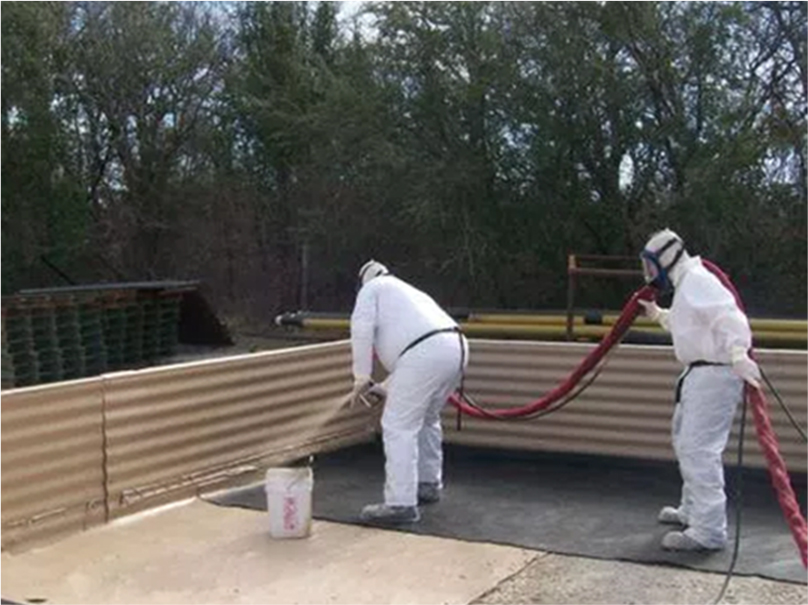
This is where the comparison gets lopsided, and it’s not really fair to either side. Flex Seal is a consumer product built to be easy. Industrial coatings like polyurea and spray-applied rubber are built for performance and applied with plural-component equipment by trained crews.
| Factor | Flex Seal | Professional polyurea |
|---|---|---|
| Who applies it | You | A trained applicator with plural-component equipment |
| Typical job size | Patches, small items | Truck beds, roofs, tanks, floors, containment |
| Foot or vehicle traffic | Liquid not recommended underfoot | Common use |
| Published performance data | Temperature ranges and coverage | Data sheets with tensile, elongation, tear and hardness |
| Cost | Low per can | Higher, but per job rather than per patch |
We’ve written a full head-to-head in ArmorThane vs Flex Seal. There’s also a middle ground. Roll-on and DIY kits sit between a spray can and a pro rig. This guide to roll-on bed liner is a good example for truck beds, and this rundown of spray-on rubber coating for metal covers the thicker rubber products a lot of people mean when they say “Flex Seal-type” coatings.
If you’re weighing doing a bigger job yourself, read should I apply polyurea coatings myself? first.
Our verdict
Flex Seal works. It’s a decent, honest product for small leaks, quick fixes and odd-shaped repairs, and the manufacturer is fairly upfront about the limits if you read the FAQ instead of the commercial. Where people get burned is using it as a permanent fix for roofs, floors, beds, ponds with fish or anything under pressure. For those, you’re paying twice: once for the cans and once for the real repair.
For more on professional waterproofing options, see polyurea waterproofing beyond the basics.
Before you reach for Flex Seal
☐ Small area
A patch, seam or item rather than a whole roof or floor.
☐ Low pressure
Rain or splash, not pressurized or below-grade water.
☐ No traffic
Not a floor, deck, balcony or truck bed.
☐ Not for food or fuel
Not a drinking water tank, food surface or gas tank.
☐ Clean and dry surface
Degreased and dried before coating.
☐ Temperature in range
Check the can for application and service ranges.
Does Flex Seal work? FAQ
Does Flex Seal work underwater?
The company says Flex Seal Spray can be applied to a wet surface in an emergency, but it adheres better to a clean, dry one and should be reapplied when dry. It’s not a long-term underwater fix.
How long does Flex Seal last?
The manufacturer says many people have found it lasts for years, depending on the environment, number of coats and maintenance. It doesn’t publish a lab-tested lifespan.
Can you use Flex Seal on a roof?
For a small leak or seam, yes, as a patch. Spray is rated to 140°F once cured, so a hot roof is near its limit. For a full roof, use a roof coating made for it.
Can you paint over Flex Seal?
Flex Seal Spray can be painted once dry. Flex Seal Liquid can’t be painted over with most traditional paints once it’s cured.
Is Flex Seal safe for drinking water?
Not per the company. Liquid isn’t approved around food, though Flex Seal says cured Liquid is OK inside a rain barrel. If people are going to drink it, buy something with a potable-water certification.
Polyurea Reviews Editors
Polyurea Reviews covers polyurea coatings, spray equipment and applications for applicators, buyers and project owners. The site is supported by ArmorThane USA, a polyurea manufacturer founded in 1989.