Polyurea vs. Epoxy Garage Floor Coating: The Complete 2026 Guide
Polyurea vs. epoxy garage floor coating — which is worth it in 2026? Compare durability, cost per square foot, cure time, UV resistance, and DIY vs. professional application in this complete guide.
In this review
Polyurea vs epoxy garage floor coating — it’s the question dominating homeowner forums and contractor discussions in 2026. If you’ve spent any time researching garage floor coatings in 2025 or 2026, you’ve probably encountered the same question over and over: polyurea vs. epoxy — which one is actually worth your money? The debate has exploded online, and for good reason. Homeowners, contractors, and coating professionals are all weighing in, and the answer isn’t as simple as most listicles make it seem.
This guide cuts through the noise. We’ll compare polyurea and epoxy garage floor coatings across every dimension that matters — durability, cost, cure time, DIY-ability, UV resistance, and long-term value — so you can make an informed decision before writing a check.
What Is Polyurea Garage Floor Coating?
Polyurea is a Polyurea Development Association-recognized synthetic elastomer formed by reacting an isocyanate component with an amine-terminated resin. That might sound like chemistry class, but in practical terms it means polyurea is extraordinarily tough, fast-curing, and flexible — properties that have made it a favorite for industrial applications ranging from pipeline lining to blast mitigation. When applied to garage floors, polyurea forms a seamless, chemically bonded shell over concrete that can withstand impact, thermal cycling, and chemical spills that would destroy lesser coatings. For waterproofing applications specifically, see our detailed guide on polyurea waterproofing techniques.
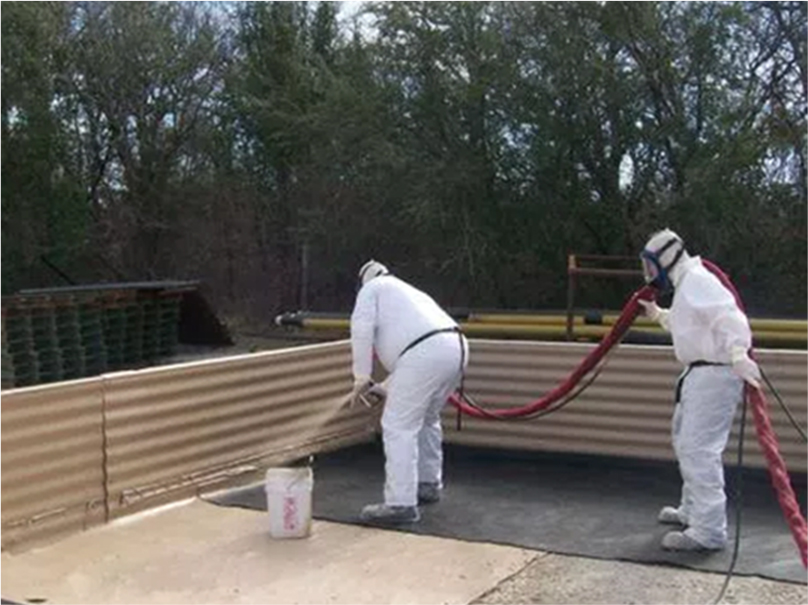
Modern polyurea garage floor systems are typically applied by professional contractors using plural-component spray equipment, though newer polyaspartic-polyurea hybrid products have made DIY application more accessible in recent years. The coating cures in as little as one hour, meaning your garage can often return to full service within 24 hours of application — a massive advantage over traditional epoxy systems.
What Is Epoxy Garage Floor Coating?
Epoxy coatings have been the standard garage floor option for decades. An epoxy system consists of a two-part formulation — a resin and a hardener — that undergoes a chemical reaction to create a rigid, bonded surface. Water-based epoxy kits from big-box stores are the entry point most homeowners know, but professional-grade 100% solids epoxy systems are a very different product in terms of performance.
Epoxy’s main strengths are its relatively low cost, wide availability, and well-documented application process. Its weaknesses are well-documented too: slow cure times (up to 72 hours before light foot traffic, up to 5 days for vehicles), susceptibility to UV yellowing, and brittleness under thermal shock — a serious issue in climates where garages experience wide temperature swings.
Polyurea vs Epoxy Garage Floor Coating: Head-to-Head Comparison
1. Durability and Hardness
Polyurea wins this category by a wide margin. Independent testing consistently shows polyurea coatings are 4 to 20 times more abrasion-resistant than standard epoxy, depending on formulation. More importantly, polyurea’s inherent flexibility (elongation at break of 100–400%) means it bends rather than cracks under impact or when the concrete substrate shifts slightly due to temperature changes. Epoxy, being rigid once cured, is vulnerable to cracking, delamination, and chipping under the same conditions — which is exactly why you see those unsightly bubbles and peeling patches on older epoxy garage floors.
2. Cure Time and Downtime
This is where polyurea absolutely dominates. A professional polyurea application can cure enough for foot traffic in 1–2 hours and full vehicle traffic in 24 hours. Epoxy systems require 24–72 hours for light use and up to 5–7 days for full cure — meaning your cars stay out of the garage for nearly a week. For most homeowners, that’s a serious inconvenience.
3. UV Resistance and Color Stability
Epoxy is notorious for yellowing when exposed to UV light. Even “UV-stable” epoxy formulations will shift in color over time when sunlight hits them through garage windows or an open door. Polyurea coatings, particularly aliphatic polyurea formulations, are inherently UV-stable and maintain their color and sheen for years longer than epoxy in comparable conditions. If your garage gets any natural light — and most do — this is a significant long-term consideration.
4. Chemical and Stain Resistance
Both coatings offer good chemical resistance, but polyurea edges ahead in the real-world garage environment. Polyurea resists motor oil, gasoline, brake fluid, and road salt more effectively than most standard epoxy systems. Hot tire pickup — that frustrating phenomenon where rubber from warm tires literally bonds to and pulls up the coating when you drive off — is essentially eliminated with polyurea. It’s a common and expensive failure mode with thin or improperly cured epoxy.
5. Cost: Polyurea vs. Epoxy Price Per Square Foot
This is where epoxy retains a real advantage for budget-conscious homeowners. Here’s a realistic breakdown for a standard two-car garage (approximately 400–500 sq ft):
| Coating Type | DIY Cost (Materials Only) | Professional Installation | Expected Lifespan |
|---|---|---|---|
| Water-Based Epoxy (DIY Kit) | $100–$300 | N/A | 3–5 years |
| 100% Solids Epoxy (Professional) | N/A | $1,500–$3,000 | 7–10 years |
| Polyurea (Professional) | N/A | $2,500–$5,000 | 15–25+ years |
| Polyaspartic-Polyurea Hybrid (DIY) | $400–$800 | $2,000–$4,000 | 10–15 years |
When you factor in lifespan, polyurea’s higher upfront cost often results in a lower total cost of ownership. A homeowner who pays $2,000 for epoxy that lasts 8 years and then needs a $2,000 refinishing job will spend more over 16 years than one who paid $4,000 for a polyurea system with a 20-year warranty.
6. Temperature Application Range
Polyurea can be applied in temperatures ranging from -20°F to 300°F, and some formulations are engineered for extreme cold-weather application. Epoxy is extremely temperature-sensitive — most epoxy systems require substrate temperatures above 50°F for proper curing and shouldn’t be applied in high humidity or cold conditions. This is a major issue for homeowners in northern climates who want to tackle a spring coating project before temperatures are reliably warm.
7. DIY vs. Professional Application
Standard epoxy is one of the most accessible floor coatings for motivated DIYers. With proper surface prep (usually shot blasting or acid etching), a patient homeowner can apply a decent epoxy system in a weekend. Water-based epoxy kits from hardware stores cost $100–$300 for a two-car garage and include reasonably good instructions.
Pure polyurea typically requires professional spray equipment and training — this is not a weekend project for most people. However, polyaspartic-polyurea hybrid coatings have changed this equation, offering roll-on systems that a skilled DIYer can apply. These hybrids won’t match the performance of spray-applied professional polyurea, but they significantly outperform water-based epoxy kits in durability and UV resistance.
The Verdict: Which Should You Choose?
Choose polyurea if:
- You want the highest-performance coating and are willing to pay for it
- You need minimal downtime (back in your garage in 24 hours)
- Your garage receives significant UV exposure
- You’re in a climate with wide temperature swings
- You plan to stay in your home long-term and want a 15–25 year solution
- You experience hot tire pickup issues with your current coating
Choose epoxy if:
- Budget is the primary constraint and you’re comfortable with a 5–10 year lifespan
- You want to DIY the project yourself without specialized equipment
- The garage isn’t subject to significant UV exposure or thermal cycling
- You’re preparing to sell and want a cost-effective visual upgrade
What Professional Applicators Are Seeing in 2026
The residential garage floor coating market has shifted noticeably over the past two years. Contractors who previously installed mainly epoxy systems report that a growing majority of their residential clients are now requesting polyurea or polyaspartic systems, driven largely by the hot tire pickup failures and UV yellowing problems that homeowners have experienced firsthand — often on previously epoxy-coated floors. The “pay more once vs. pay again in five years” conversation has become much easier for contractors to have now that consumers have lived through epoxy’s limitations.
There’s also been a notable rise in interest around one-day garage floor systems — polyurea-based coatings that allow complete application and cure within a single business day. Companies offering this model have seen strong growth, and the concept has become a strong selling point for homeowners who can’t or don’t want to displace their garage contents for multiple days.
Common Questions About Polyurea Garage Floor Coatings
Is polyurea worth it for a garage floor?
For most homeowners who plan to stay in their home long-term and want a low-maintenance, high-performance floor, yes — polyurea is worth the premium price. The combination of superior durability, UV stability, fast cure time, and a typical 15–20 year lifespan makes it a strong long-term investment when compared to epoxy systems that may need replacement in under a decade.
How long does polyurea garage floor coating last?
When properly installed over prepared concrete, a professional polyurea garage floor coating typically lasts 15 to 25 years or more. Many professional installers offer warranties of 10–15 years. By comparison, professional epoxy systems generally last 7–10 years, and DIY water-based epoxy kits rarely exceed 3–5 years before showing significant wear.
Can I apply polyurea over existing epoxy?
In some cases, yes — but it requires careful evaluation of the existing coating’s condition and adhesion. If the epoxy is peeling, delaminating, or showing hot tire pickup damage, the failed coating must be removed completely before polyurea application. A professional applicator will typically perform adhesion testing and may recommend diamond grinding or shot blasting to ensure proper bonding. Applying polyurea over a failed epoxy coating is one of the most common mistakes in the industry and will result in premature failure of the new coating as well.
What is the best brand of polyurea for garage floors?
The market includes several strong professional-grade polyurea systems. ArmorThane, Line-X, Rhino Linings, and VersaFlex are among the most established names in the professional coating space. Read our ArmorThane vs Line-X comparison and our polyurea vs polyurethane guide for more context. For DIY-friendly polyaspartic-polyurea hybrids, brands like Rust-Oleum’s EpoxyShield Polyurea line and similar products have gained traction at the consumer level. However, brand alone doesn’t determine quality — proper substrate preparation and application technique account for a significant portion of any coating system’s performance and longevity.
Final Thoughts
The polyurea vs. epoxy debate isn’t going away anytime soon, and that’s actually a good thing for consumers — the competition has driven innovation on both sides, and today’s garage floor coating options are better than they’ve ever been. But the data is increasingly clear: for homeowners who want a premium, long-lasting garage floor, polyurea is the dominant choice in 2026. The higher upfront investment is justified by superior performance in nearly every measurable category, and the real-world failure modes of epoxy — hot tire pickup, UV yellowing, thermal cracking — have become well-known enough that many homeowners no longer consider epoxy a viable long-term solution.
If you’re starting from scratch or refinishing a floor that’s seen better days, get multiple quotes for professional polyurea application — and make sure the contractor includes proper surface preparation in the scope of work. That’s where most coating failures begin, regardless of what product ends up on top.
Polyurea Reviews Editors
Polyurea Reviews covers polyurea coatings, spray equipment and applications for applicators, buyers and project owners. The site is supported by ArmorThane USA, a polyurea manufacturer founded in 1989.