There’s a particular kind of dread that settles in when you walk downstairs and feel that faint, unmistakable dampness under your feet. Maybe you notice a musty smell that wasn’t there last spring, or you spot a thin white chalky residue creeping along the base of your basement wall. Most homeowners shrug it off the first time. By the second or third time, they start Googling — and that’s usually when they find out just how serious a wet foundation can be.
Foundation waterproofing isn’t a flashy home improvement project. It doesn’t get the same attention as a kitchen remodel or a new roof. But ask any structural engineer or seasoned contractor and they’ll tell you the same thing: nothing threatens the long-term integrity of a home quite like water infiltration at the foundation level. Left unchecked, moisture destroys insulation, corrodes steel, degrades concrete, invites mold, and can ultimately compromise the very structure holding your home up.
This guide is for homeowners who want straight answers. We’ll cover what foundation waterproofing actually is, the different methods contractors use, how to spot early warning signs, what DIY approaches are worth your time, and when you absolutely need to call a professional. We’ll also talk about costs, because that part matters just as much as everything else.
Why Foundation Waterproofing Matters More Than You Think
Your foundation is the single most important structural element of your home. It bears the entire load of everything above it — walls, floors, roof, furniture, people — and it does so while sitting in direct contact with soil that shifts, swells, contracts, and carries water. That relationship between concrete and ground-level moisture is at the heart of why foundation waterproofing exists.
When water finds a path into your foundation — whether through a hairline crack, a porous concrete wall, or a failing sealant joint — it doesn’t stop. Water always moves toward the path of least resistance, and once it’s inside your basement or crawl space, it brings a cascade of problems with it. Mold and mildew begin growing within 24 to 48 hours of moisture exposure. Efflorescence (that white chalky mineral deposit) signals that water is actively migrating through your walls. Wood framing rots. Insulation loses its R-value. And over time, hydrostatic pressure — the force exerted by water-saturated soil pushing against your foundation walls — can cause cracking, bowing, and in serious cases, full structural failure.
The financial stakes are equally serious. The average cost of foundation repair ranges from $4,000 to $10,000 depending on the severity, and major structural repairs can easily exceed $30,000 or more. Waterproofing your foundation proactively — before damage sets in — costs a fraction of that. It’s one of those rare home investments where an ounce of prevention genuinely does save you pounds of heartache down the road.
Understanding How Water Gets Into Your Foundation
Before you can fix a water problem, you need to understand where it’s actually coming from. Foundation water intrusion typically falls into one of three categories, and the source matters enormously when it comes to choosing the right waterproofing solution.
Hydrostatic Pressure
This is the most common and most destructive cause of foundation water intrusion. When the soil surrounding your foundation becomes saturated — after heavy rain, during snowmelt, or in areas with a high water table — it exerts tremendous lateral and vertical pressure against your foundation walls and floor. Concrete is porous by nature, and given enough sustained pressure, water will work its way through even structurally sound walls. Homes built in low-lying areas, near bodies of water, or in regions with heavy clay soil are especially susceptible to hydrostatic pressure issues.
Surface Water Runoff
Sometimes the problem isn’t groundwater at all — it’s surface water that isn’t being directed away from the home properly. Gutters that overflow, downspouts that discharge too close to the foundation, negative grading (where the ground slopes toward the house rather than away from it), and poorly placed landscaping features can all funnel enormous volumes of water directly toward your foundation during rain events. This type of intrusion is often fixable through relatively simple drainage corrections before more invasive waterproofing becomes necessary.
Condensation and Interior Humidity
Not all basement moisture comes from outside. In warmer months, warm humid air that enters a cool basement can condense on cold surfaces — walls, pipes, floors — and create what looks like a water intrusion problem. This is sometimes misdiagnosed as a waterproofing failure when it’s actually a ventilation and humidity control issue. A simple test: tape a piece of plastic sheeting to a suspected wet wall, seal the edges completely, and wait 24 hours. If moisture forms on the room side of the plastic, it’s condensation. If it forms on the wall side, you have water coming through from outside.
The Warning Signs of Foundation Water Damage
Catching foundation water problems early can mean the difference between a manageable repair and a major structural remediation project. Here are the most important warning signs every homeowner should know how to recognize.
Efflorescence is that white, powdery mineral deposit that forms on concrete and masonry walls when water migrates through them, carrying dissolved salts that are deposited on the surface as the water evaporates. It’s not structurally dangerous on its own, but it’s one of the clearest indicators that water is actively moving through your foundation walls.
Staining and discoloration along the base of foundation walls, on the floor, or at the joint where the wall meets the floor is another reliable early warning sign. Rust-colored stains typically indicate moisture is reaching steel reinforcement within the concrete. Dark water stains indicate repeated wet-dry cycles.
Cracks in foundation walls deserve careful attention, though not all cracks are equal. Hairline shrinkage cracks in poured concrete walls are common and often benign. Horizontal cracks in block or poured concrete walls, however, are serious — they typically indicate lateral pressure from saturated soil and require immediate professional evaluation. Stair-step cracks in block foundations and diagonal cracks that widen over time are also red flags.
Bowing or bulging walls are a sign that hydrostatic pressure has been building for some time and is actively deforming your foundation walls. This is a structural emergency, not a cosmetic issue, and requires professional intervention without delay.
Persistent musty odors , visible mold or mildew growth, and peeling paint or wallboard in the basement are all telltale signs of chronic moisture issues. By the time mold is visible to the naked eye, it has typically been growing for weeks or months.
Flooding or pooling water after rain events — even small puddles that dry up within a day or two — should never be dismissed as minor. They indicate active water infiltration pathways that will worsen over time.
Foundation Waterproofing Methods: A Detailed Breakdown
There is no single “best” foundation waterproofing method — the right approach depends on your specific situation, the source of your water problem, the age and construction of your foundation, and your budget. Here’s a thorough look at the most widely used methods, with an honest assessment of what each one is good at and where it falls short.
Exterior Waterproofing
Exterior waterproofing is widely considered the gold standard approach because it addresses water at its source — outside the foundation — before it ever has a chance to enter. The process involves excavating the soil around the perimeter of the foundation down to the footing level, cleaning and inspecting the foundation wall, applying a waterproof membrane or coating to the exterior surface, installing a drainage board to direct water away from the wall, and placing a perimeter drain (French drain) at the footing level to channel water to a sump pit or daylight outlet.
The materials used for exterior waterproof membranes have evolved significantly over the past two decades. Traditional asphalt-based coatings have largely given way to more effective options including rubberized asphalt sheet membranes, crystalline waterproofing compounds that actually grow crystals within the concrete to block water pathways, and — increasingly — polyurea and polyurethane spray-applied coatings that form a seamless, highly flexible protective barrier across the entire exterior foundation surface.
The main drawbacks of exterior waterproofing are cost and disruption. Excavating around the perimeter of a home is a significant undertaking that requires heavy equipment, landscaping removal, and typically several days of work. Costs can range from $8,000 to $15,000 or more for an average-sized home. That said, when done correctly, exterior waterproofing is the most durable and comprehensive solution available, often backed by lifetime transferable warranties.
Interior Waterproofing Systems
Interior waterproofing doesn’t prevent water from entering the foundation — instead, it manages water that does get in, collecting it and directing it to a sump pump before it can cause damage. Interior drain tile systems (also called interior French drains) involve cutting a channel in the concrete floor along the perimeter of the basement, installing perforated pipe in that channel along with drainage aggregate, patching the concrete floor back over it, and connecting the system to a sump basin where a pump ejects the collected water out of the home.
Interior waterproofing is significantly less expensive than exterior work (typically $5,000 to $12,000 for a full basement system), less disruptive, and can be completed in a day or two without any exterior excavation. For many homeowners dealing with hydrostatic pressure issues — especially in existing homes where exterior excavation would be prohibitively expensive or disruptive — interior drainage systems are the practical solution of choice.
The honest limitation of interior waterproofing is that it manages water rather than blocking it. Your foundation walls may still get wet — water still enters and contacts the concrete — but it’s captured before it reaches your living space. For truly severe water problems, or for homeowners who want to finish their basement with high-quality materials, pairing interior drainage with exterior waterproofing or wall crack injection is often the better approach.
Crack Injection
For homes with specific, localized crack intrusion in poured concrete foundations, crack injection is an elegant and highly effective repair. The two most common materials used are polyurethane foam and epoxy. Polyurethane foam injection is ideal for actively leaking cracks — the material expands to fill the crack completely and remains flexible after curing, accommodating minor future movement in the concrete. Epoxy injection creates a rigid, structural bond that actually restores the tensile strength of the concrete across the crack, making it the preferred choice for dry or dormant cracks where structural restoration is the goal.
Crack injection is relatively affordable ($300 to $800 per crack for professional service), minimally invasive, and can be done from the interior without any excavation. It’s important to understand, however, that crack injection addresses specific symptom locations without solving broader drainage or hydrostatic pressure issues. If water pressure is the underlying cause, new cracks are likely to appear over time unless that pressure is also managed.
Waterproof Coatings and Sealers
Interior wall coatings and sealers occupy the most accessible and most misunderstood segment of the foundation waterproofing market. Products range from simple brush-on waterproofing paints (generally ineffective for active water intrusion) to high-performance polyurea and polyurethane spray coatings that form a genuinely tough, flexible, seamless membrane on interior or exterior surfaces.
It’s worth being direct about the limitations here: standard waterproofing paint products found at home improvement stores — the kind you roll onto a basement wall on a Saturday afternoon — are vapor barriers at best. They can reduce humidity and slow minor moisture migration through concrete, but they will not hold back active water intrusion under hydrostatic pressure. Many homeowners apply these products and then wonder why water is still getting in.
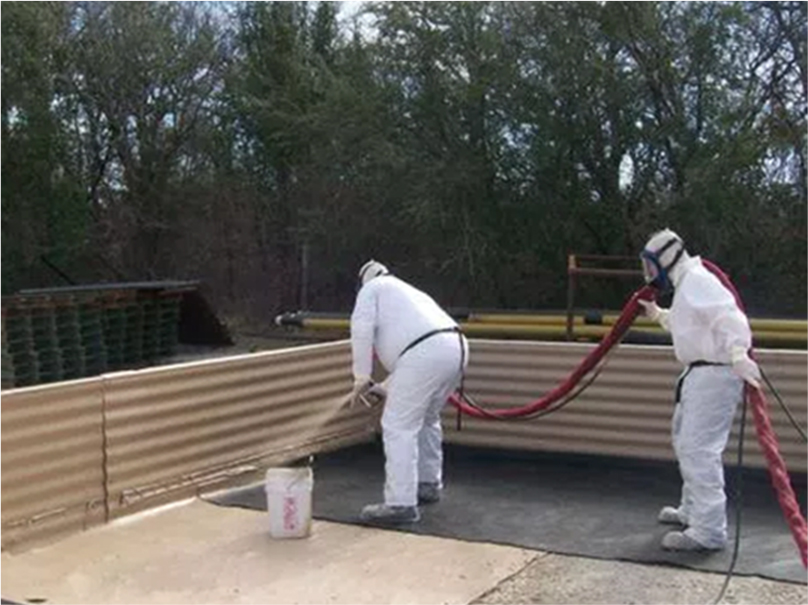
Professional-grade polyurea coatings are a different matter entirely. Polyurea is a spray-applied elastomeric material that bonds exceptionally well to concrete and masonry, creates a truly seamless barrier with no seams or laps to fail, cures in seconds, and offers flexibility that accommodates concrete movement without cracking. When applied to exterior foundation surfaces as part of a comprehensive waterproofing system, high-quality polyurea coatings represent a significant advancement over traditional membrane systems. They’re particularly well-suited to irregular surfaces, corners, pipe penetrations, and other areas where sheet membranes are difficult to install properly.
Thinking about spraying polyurea yourself?
Get rig, training and material guidance matched to your market.
Plan my start Drainage Corrections and Grading
Before any structural waterproofing work begins, it’s worth taking a hard look at the simpler factors that may be contributing to your water problem — or even causing it entirely. Proper drainage management is the first line of defense for any home.
The ground around your home should slope away from the foundation at a rate of at least 6 inches over the first 10 feet. If it doesn’t, regrading is a relatively straightforward fix that can dramatically reduce water pressure against your foundation. Gutters should be clean, free of blockages, and sized appropriately for your roof area. Downspouts should discharge at least 6 to 10 feet away from the foundation — not into a buried pipe that may be cracked or clogged. Window wells on basement windows should have gravel drainage at their base and covers if they’re below grade.
These seem like basic maintenance items, and they are. But they’re also the items that are most frequently overlooked, and correcting them costs a fraction of what more invasive waterproofing work does. A good contractor will address these issues as part of any comprehensive waterproofing evaluation.
Sump Pumps: Your Foundation’s Last Line of Defense
No discussion of foundation waterproofing is complete without talking about sump pumps. If you have a basement, you almost certainly should have a sump pump — and if you already have one, making sure it’s properly maintained and appropriately sized is critical.
A sump pump sits in a basin (the sump pit) at the lowest point of your basement floor, typically in a corner. When water collects in the basin — whether from an interior drain tile system, hydrostatic pressure, or general groundwater seepage — a float switch activates the pump, which ejects the water through a discharge pipe to a safe location away from the home.
Primary submersible sump pumps range from budget models in the $150 to $300 range to high-capacity units costing $500 or more. For most homes, a 1/3 to 1/2 horsepower submersible pump is adequate. The crucial addition that many homeowners overlook is a battery backup system. Your sump pump runs on electricity — and the events most likely to cause flooding (severe storms, rapid snowmelt) are exactly the events most likely to knock out your power. A battery backup pump kicks in automatically when the primary pump fails or is overwhelmed, providing critical protection during the situations you need it most.
Sump pump maintenance is straightforward but important: test the pump monthly by pouring water into the pit until the float activates, clean the pit annually to remove debris and sediment, check the discharge line to ensure it’s unobstructed and discharges properly, and replace the primary pump every 7 to 10 years as a preventive measure rather than waiting for it to fail during a flood event.
Crawl Space Waterproofing: The Often-Neglected Area
Homeowners with crawl spaces rather than full basements face a distinct set of waterproofing challenges — and unfortunately, those challenges are frequently underestimated until significant damage has already occurred. Crawl spaces are prone to moisture problems for a simple reason: they are below grade, often have exposed dirt floors, and typically lack adequate ventilation or vapor management.
The traditional approach to crawl space moisture management — ventilating the space with exterior vents to let it “breathe” — has been largely discredited by building science research. Vented crawl spaces in humid climates actually perform worse than sealed ones, because outdoor summer air is so moisture-laden that venting introduces more water vapor than it removes. Modern best practice calls for encapsulating the crawl space: sealing it completely from the soil and exterior with a heavy-duty vapor barrier liner, closing off exterior vents, and conditioning the space with a dehumidifier or by connecting it to the home’s HVAC system.
A complete crawl space encapsulation involves laying a thick (typically 12 to 20 mil) reinforced polyethylene or similar barrier over the entire floor and up the walls, sealing all seams and penetrations, installing a perimeter drainage channel if needed, and adding a dehumidifier sized appropriately for the space. Professional crawl space encapsulation typically runs $5,000 to $15,000 depending on the size of the space and the extent of any existing moisture damage.
The return on investment for crawl space encapsulation is compelling: improved indoor air quality throughout the home (since the air in your crawl space continually rises into your living areas), reduced energy bills due to improved floor insulation performance, protection of structural wood framing from rot and pest damage, and extended life of HVAC equipment and ductwork that runs through the space.
Foundation Waterproofing Costs: What to Realistically Budget
Cost is invariably the first question homeowners ask, and it deserves an honest, thorough answer rather than vague ranges that aren’t useful for actual planning.
For exterior waterproofing, expect to budget $8,000 to $20,000 for a typical single-family home, with the wide range driven by foundation perimeter length, depth of excavation required, soil conditions, and geographic location. In high-cost-of-living areas or for larger homes, $25,000 to $35,000 is not unusual for comprehensive exterior work.
Interior drain tile systems run $5,000 to $12,000 for most basement installations. Smaller basements and simpler installations fall at the lower end; larger or more complex projects (partial walls, multiple sump pit locations, additional drainage features) push toward the higher end.
Crack injection repairs are among the more affordable interventions at $300 to $800 per individual crack for professional service, though multiple cracks quickly add up. DIY crack injection kits are available for $40 to $100 per crack and can be effective in the right circumstances.
Crawl space encapsulation typically runs $5,000 to $15,000. Basic vapor barrier installation without perimeter drainage is at the lower end; full encapsulation with drainage, a dehumidifier, and vent closure is at the higher end.
Sump pump installation (if one isn’t already present) adds $600 to $2,000 to any project, with battery backup systems adding $300 to $800.
One cost factor that’s easy to overlook: the warranty. Reputable waterproofing contractors typically offer lifetime transferable warranties on their work and materials. This warranty transfers to new owners if the home is sold, which makes it a genuine selling point. Be skeptical of any company offering dramatically lower prices without a comparable warranty — the materials and workmanship behind a proper waterproofing installation are what drive both the cost and the durability of the result.
DIY Foundation Waterproofing: What Works and What Doesn’t
Let’s be honest about this: most meaningful foundation waterproofing work is not well-suited to a weekend DIY project. Exterior excavation requires equipment and expertise that most homeowners simply don’t have. Interior drain tile installation involves concrete cutting, aggregate placement, and plumbing that’s well within the capability of a skilled DIYer but genuinely difficult to execute properly without experience. That said, there are meaningful things homeowners can do themselves.
Improving drainage and grading is something most homeowners can tackle: add soil to low spots around the foundation, redirect downspouts with inexpensive extensions, keep gutters clean and functional, and grade landscaping beds away from the house. These steps cost little and can make a real difference in how much water pressure your foundation faces.
Small crack repairs in poured concrete walls are DIY-accessible using polyurethane injection kits. These kits are widely available, the process is relatively straightforward, and they work well for hairline to medium-width cracks that don’t involve active lateral movement. Follow the manufacturer’s instructions carefully, work from the lowest point of the crack upward, and understand that injecting a crack in a block foundation is considerably more difficult than in poured concrete.
Applying a quality masonry waterproofer or crystalline waterproofing product to interior walls can help manage minor moisture seepage and vapor transmission, though it won’t solve active leaks. Products that contain crystalline compounds (which grow crystals inside the concrete to block water pathways) perform significantly better than standard latex or paint-based products for this purpose.
Installing a sump pump or adding a battery backup to an existing system is within the capability of a homeowner comfortable with basic plumbing. Ensure the discharge pipe is properly sized, slopes consistently downward, and discharges at least 10 feet from the foundation.
Know when to call a professional: horizontal wall cracks, bowing walls, multiple crack patterns, visible mold on structural wood, persistent standing water, or any situation where you’re not confident about the source of the problem all warrant expert evaluation before any repair work begins.
Choosing a Foundation Waterproofing Contractor
The foundation waterproofing industry has a complicated reputation — it includes excellent, highly professional companies alongside high-pressure outfits that use scare tactics to oversell unnecessary work. Knowing how to evaluate contractors is as important as knowing which waterproofing methods exist.
Start with credentials. Look for contractors who are members of the Basement Health Association (BHA) or similar industry organizations, hold state contractor licenses where required, and carry both general liability and workers’ compensation insurance. Ask specifically about the installer’s experience — not just the company’s years in business, but the crew lead’s hands-on experience with the specific type of work you need.
Get at least three written estimates. Reputable companies will provide detailed written proposals that specify the exact scope of work, materials to be used (including product brand and thickness/specification), warranty terms, and payment schedule. Be very wary of any contractor who pushes for a same-day decision, won’t provide written documentation, or whose price is dramatically lower than competitors without a clear explanation.
Ask about the warranty — specifically, who backs it. Some contractors offer warranties backed by their own company alone, which is only as good as the company’s continued existence. Others offer warranties backed by the material manufacturer or a third-party warranty insurer, which provides protection even if the contractor goes out of business.
Check references, read reviews on multiple platforms, and look for any patterns in complaints. A company with hundreds of reviews and an occasional complaint is normal; a company with repeated complaints about the same issue — warranty claims not honored, recurrence of water problems, poor communication — is a red flag worth heeding.
Finally, be appropriately skeptical of any contractor who, after a brief walkthrough, immediately recommends the most expensive possible solution without considering simpler alternatives first. A good waterproofing professional will identify the actual source of your water problem before recommending a fix — not the other way around.
The Role of Polyurea in Modern Foundation Waterproofing
Among the materials revolution happening in the waterproofing industry, polyurea coatings deserve particular attention. Originally developed for industrial applications — pipeline linings, truck bed liners, mining equipment — polyurea has earned a serious reputation in the waterproofing and protective coatings world over the past decade. Its properties make it exceptionally well-suited for foundation and below-grade waterproofing applications.
Polyurea is 100% solid (no solvents evaporate during curing), which means the full applied thickness is the final thickness. It cures in seconds rather than hours, allowing for faster application and reduced exposure to weather during the process. It’s highly flexible — with elongation properties that allow it to stretch significantly without cracking — which means it can accommodate the minor movement and thermal cycling that all foundations experience without developing the tiny cracks that rigid coatings are susceptible to. And it bonds tenaciously to properly prepared concrete and masonry surfaces, creating a truly seamless membrane that has no seams, laps, or mechanical fasteners to fail.
The application of polyurea requires specialized plural-component spray equipment and properly trained applicators — it’s not a product that can be applied effectively by hand or with standard equipment. But in the hands of a qualified installer, a properly applied polyurea coating on a foundation surface provides a level of protection that is genuinely superior to traditional asphalt or rubber sheet membrane systems, particularly in terms of long-term durability, resistance to root intrusion, and performance at seams and transitions.
As the material has become more widely adopted in residential applications, more foundation waterproofing contractors are adding polyurea application capability to their service offerings. If exterior waterproofing is appropriate for your situation, asking specifically about polyurea membrane options is worth the conversation.
Maintaining Your Waterproofing System Long-Term
Foundation waterproofing is not a set-it-and-forget-it proposition. Like all systems in your home, it benefits from regular attention and maintenance to perform as intended over the long term.
Inspect your basement or crawl space seasonally — specifically in early spring (when snowmelt and spring rains present the greatest water load) and after any significant storm event. Look for new staining, efflorescence, cracks, or any moisture that wasn’t present during your last inspection. Small issues caught early are almost always easier and less expensive to address than those that are allowed to progress.
Test your sump pump monthly by pouring a bucket of water into the pit to trigger the float switch. Confirm that the discharge line is clear and is directing water properly away from the home. If you have a battery backup unit, test it quarterly and replace the battery on the manufacturer’s recommended schedule (typically every 3 to 5 years).
Maintain your exterior drainage features: keep gutters clean, check that downspout extensions are still in place and directing water away from the foundation, and inspect the grading around the perimeter annually after freeze-thaw cycles that can shift soil and alter drainage patterns.
If you have an interior drain tile system, have it inspected by the installing contractor every few years to ensure the perforated pipe isn’t becoming blocked with sediment or mineral deposits. Most interior system warranties include periodic inspection provisions — take advantage of them.
Keep records of all waterproofing work performed on your home, including contractor information, materials used, warranty documentation, and dates of service. This information is valuable both for maintenance purposes and for disclosure when the home is eventually sold.
Foundation Waterproofing and Home Resale Value
For homeowners who are thinking ahead to eventually selling their home, foundation waterproofing is worth considering from a purely financial perspective as well. Water damage and foundation issues are among the most common — and most deal-killing — findings in home inspections. The presence of a professionally installed and warranted waterproofing system can meaningfully strengthen a buyer’s confidence in a property, while evidence of unresolved water intrusion can send buyers walking or result in significant price negotiations.
The transferable warranty aspect of most professional waterproofing installations adds tangible value. Buyers know that if water problems arise after they move in, they’re covered by a warranty they can actually enforce — not just a verbal assurance from the seller. In competitive markets, a home with documented, warranted waterproofing work is a genuinely more attractive asset than one without it.
It’s also worth noting that disclosure requirements in most states require sellers to disclose known water intrusion problems. Addressing those problems proactively — and documenting the remediation thoroughly — is almost always preferable to disclosing an unresolved issue or, worse, concealing one and facing legal liability later.
Final Thoughts: Getting Your Foundation Right
Foundation waterproofing is the kind of topic that most people only start researching when something is already wrong. If that’s where you are right now, take a breath — most foundation water problems are solvable, and the fact that you’re educating yourself puts you ahead of homeowners who keep putting off the investigation.
The key principles are straightforward: identify where your water is actually coming from before choosing a solution, address surface drainage issues first since they’re least expensive, match your waterproofing approach to the severity and source of the problem, hire qualified contractors with documented track records and real warranties, and maintain your systems once they’re in place.
Your foundation was designed to last the lifetime of your home — and with the right waterproofing in place, it will. The investment you make in protecting it now is measured not just in dollars saved on future repairs, but in the peace of mind that comes from knowing the ground your home stands on is solid, dry, and secure.