Reading time: approximately 10 minutes | Updated: March 2026
Hunting Blinds Polyurea Coating: What’s Covered in This Guide
- What Is Polyurea and Why Do Hunters Care?
- Top Hunting Blinds That Use Polyurea Coatings
- What Makes a Polyurea Application Good vs. Mediocre?
- What to Look for When Evaluating Blind Coatings
- Should You Retrofit an Existing Blind?
- Frequently Asked Questions
- The Practical Takeaway
Hunting blinds polyurea coating has become one of the most talked-about upgrades in the blind-building world — and if you spend any serious time in the field, you probably understand why. Not all blinds hold up the same way. Some feel solid for a season or two, then start showing their age — peeling interiors, musty smells, moisture damage creeping up the corners. A big part of what separates a blind that lasts from one that doesn’t comes down to what’s coating the inside. More hunters and manufacturers are turning to polyurea hunting blind coating as the answer, and once you understand what this material actually does, it’s hard to argue with that decision.
This guide breaks down the top hunting blinds that use polyurea coatings, what makes polyurea different from standard paints and liners, and what you should look for if you’re in the market for a blind built to take a beating season after season.
What Is Polyurea and Why Do Hunters Care?
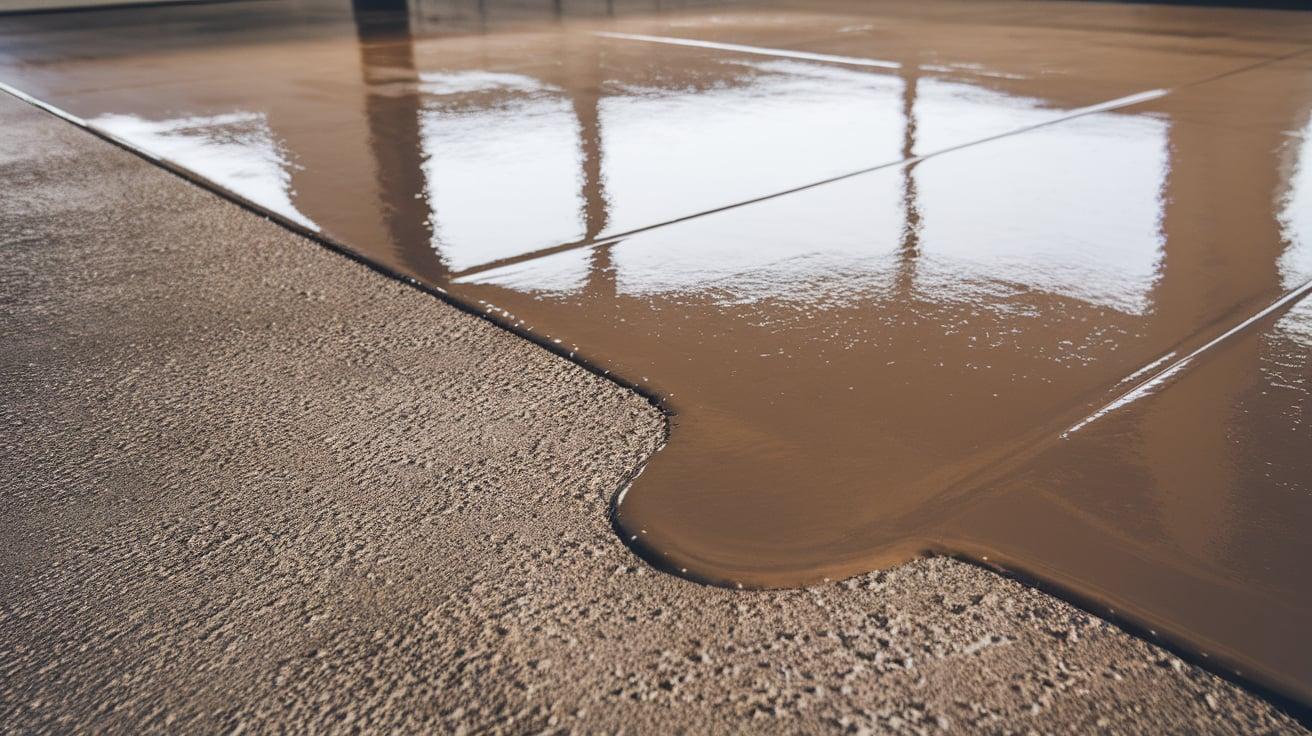
Polyurea is an elastomeric coating that forms through a chemical reaction between an isocyanate and an amine. That probably doesn’t mean much to most hunters — what matters is what it does. Once it cures, polyurea creates a seamless, flexible membrane that bonds tightly to virtually any surface. It handles moisture without breaking down, resists abrasion better than most coatings on the market, and doesn’t crack or peel when temperatures swing from summer heat to hard winter cold.
For a polyurea-coated hunting blind, those properties translate to a few real-world benefits. The inside of your blind stays dry. Odors from mold, mildew, or off-gassing materials are dramatically reduced. The surface holds up to boots, gear, rifle butts, and all the other abuse that gets thrown at a blind during a real hunting season. And unlike painted or foam-lined interiors, a polyurea surface doesn’t delaminate over time.
If you want a more detailed breakdown of why interior coating quality directly affects your hunting experience, this piece from Polyurea Nation on why the coating inside your hunting blind matters more than you think covers it thoroughly. It gets into the science without losing the practical angle, which is rare.
Top Hunting Blinds Polyurea Coating Brands and Builders
The hunting blind market has grown a lot over the past decade. Box blinds, tower blinds, ground blinds — manufacturers have gotten more sophisticated about materials. The brands and models below have either adopted polyurea as part of their standard build process or offer it as a specialty coating option. Each one handles the application a little differently, but they all share the same basic goal: a blind that stays cleaner, tighter, and more comfortable over years of hard use.
1. Shadow Hunter Blinds — Sprayed Polyurea Interior
Shadow Hunter has built a reputation as one of the more serious box blind manufacturers in the country, particularly in the whitetail community. Their steel-framed blinds are heavy-duty by design, but what sets the higher-end models apart is the interior treatment. Shadow Hunter uses a sprayed polyurea liner on the interior walls and floor of several models in their lineup. The result is a surface that doesn’t absorb scent, resists moisture intrusion, and doesn’t create the kind of condensation problems that uncoated wood or steel panels are prone to during cold mornings.
Hunters who use Shadow Hunter blinds in wet climates tend to notice the difference pretty quickly. The interior doesn’t take on that musty, closed-up smell that cheaper blinds develop after a rainy season. The floor, in particular, benefits from the coating — you can hose it out between seasons without worrying about the surface deteriorating.
2. Redneck Blinds — Polyurea Over HDPE Panels
Redneck Blinds has been around since the early 2000s, and they’ve earned a loyal following among hunters who want a blind that can sit in the field year-round without babysitting. Their signature product is a high-density polyethylene panel construction, which handles moisture well on its own. But the models that include an interior polyurea coating take durability a step further.
The polyurea layer in a Redneck blind does a couple things worth noting. It adds a noise-dampening quality to the interior — small movements inside the blind don’t ring out against bare hard plastic the way they otherwise would. It also locks out UV degradation on the interior surface, which is more of a problem than most hunters realize, especially in blinds with large windows. For hunters who leave their blinds up from early fall through late winter, that UV protection adds up over multiple seasons.
3. The Blind Source — Custom Polyurea Builds
Not every polyurea-coated hunting blind comes off an assembly line. A growing number of custom blind builders are incorporating polyurea spraying into their workflow, particularly for clients who want tower blinds or oversized box blinds built for specific terrain. The Blind Source is one example of a shop that has moved in this direction.
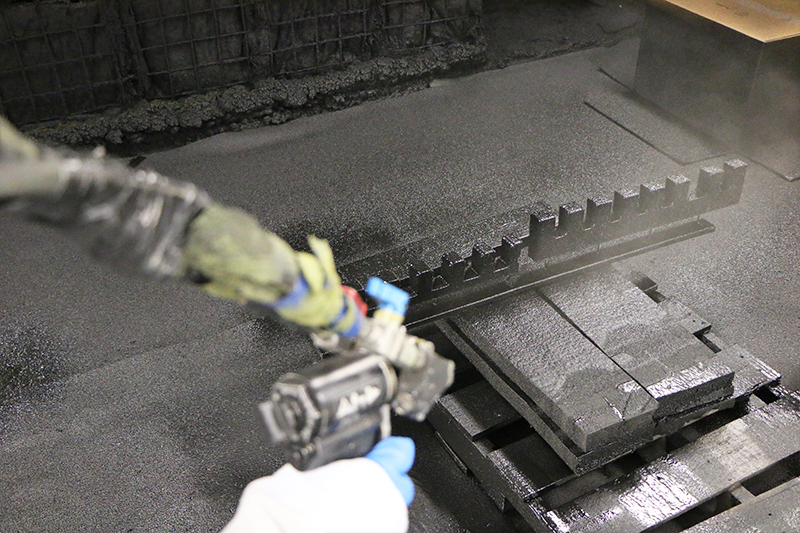
Custom builds have an advantage here because the polyurea application can be tailored — thicker on the floor where wear is heaviest, applied to exterior surfaces for weather resistance, or color-matched to the hunting environment. A shop that knows what they’re doing with a spray rig can coat a full blind interior in a matter of hours, and the finished product is meaningfully different from anything a big-box manufacturer can deliver at scale.
4. Kill Shot Blinds — Textured Polyurea Application
Kill Shot Blinds is a smaller operation compared to some of the national brands, but they’ve developed a following in the South and Midwest for building box blinds with polyurea interior coating and serious attention to finish quality. They offer a sprayed polyurea option across most of their standard models, and it’s not an afterthought — it’s integrated into their production process.
One thing that distinguishes Kill Shot’s approach is the texture profile of their polyurea application. They apply it with a slight grip texture rather than a smooth finish, which makes a real difference when you’re wearing rubber boots and trying to stay quiet on a cold morning. The surface doesn’t become slippery when wet, which is a detail that sounds minor until you’ve nearly knocked over a shooting stick in the dark.
5. Regional Tower Blind Builders — Polyurea as Standard Spec
Across the custom tower blind building segment more broadly, polyurea has become the coating of choice for builders who are serious about longevity. Several regional manufacturers — particularly in Texas, Oklahoma, and the Southeast — have retooled to include polyurea spraying as a standard step. The category includes operations building tall tower blinds for whitetail, feral hog, and exotic game hunting, where the blinds may sit in the field full-time for years.
For that application, polyurea’s resistance to humidity and temperature cycling is especially relevant. A blind sitting in a South Texas pasture goes through brutal thermal stress — 100-degree summer days followed by hard cold fronts in the winter. Standard paints and liners crack and peel under those conditions. Polyurea doesn’t.
What Makes a Polyurea Application Good vs. Mediocre?
Here’s something worth understanding if you’re shopping for a polyurea-coated blind: not all applications are created equal. Polyurea is a high-performance material, but the results depend heavily on surface preparation and the skill of the applicator. A poorly prepped surface leads to adhesion failure. The wrong formulation applied at the wrong temperature cures improperly. And a blind builder who learned to spray last month is going to get different results than someone with years of experience dialing in equipment and technique.
If you’re having a custom blind built and want to know what to look for from the person doing the coating work, the American Polyurea training guide for hunting blind builders is one of the more useful resources available. It walks through equipment setup, surface prep, and application technique in practical terms — not just product marketing. Understanding even the basics helps you ask better questions when you’re vetting a builder.
What to Look for When Evaluating Hunting Blind Coatings
If you’re comparing hunting blinds polyurea coating options and want to evaluate quality, here are the things worth paying attention to. Not all applications are equal, and knowing these criteria separates a genuinely durable blind from one that just sounds good in the product description.
Adhesion to the substrate. Ask the manufacturer what the surface looked like before coating and what prep process they used. Sandblasting, grinding, or chemical etching are all legitimate prep methods depending on the substrate. If the answer is “we wiped it down and sprayed,” that’s not a great sign.
Coating thickness. A meaningful polyurea coating for a hunting blind interior is typically somewhere between 60 and 100 mils depending on the application. Thinner than that and you start losing some of the durability benefits. Ask for specs if the manufacturer publishes them.
Formulation specifics. There are different polyurea formulations on the market, and they behave differently. Pure polyurea and hybrid polyurea/polyurethane blends are both used in the industry, with pure polyurea generally offering faster cure times and better chemical resistance. Neither is universally better, but knowing which one you’re getting tells you something about the manufacturer’s priorities.
Seam and corner coverage. The most vulnerable spots in any blind are the corners and seams where panels meet. A good polyurea application covers those areas seamlessly — that’s actually one of the material’s biggest advantages over sheet liners or paint. If a manufacturer is cutting corners, it shows up there first.
Odor neutrality after cure. Fully cured polyurea is essentially odor-free. If a coated blind has a chemical smell several weeks after production, something went wrong with the cure process. For whitetail hunting especially, any foreign odor in the blind is a liability.
Should You Retrofit an Existing Blind With Polyurea?
One question that comes up regularly is whether it makes sense to have an existing blind retrofitted with hunting blinds polyurea coating applied by a professional, rather than buying new. The honest answer is: it depends on what you’re starting with.
If the blind is structurally sound and the interior surface is in reasonable condition, a professional retrofit can add years of life to the structure. The process involves cleaning, surface prep, and spray application — usually a one- or two-day job depending on the size of the blind. The cost varies, but for a well-built blind you want to keep for another decade, it often makes financial sense.
If the blind has significant structural damage, moisture infiltration through the walls, or interior surfaces that are already delaminating badly, a coating alone won’t fix the underlying problems. In those cases, the retrofit conversation needs to happen alongside a structural assessment.
For hunters who have multiple blinds on a property — which is common on larger parcels — a mobile polyurea contractor can coat all of them in a single visit, which changes the economics considerably. A few calls to regional applicators with experience in hunting structure coatings will give you a reasonable baseline on what to expect from a pricing standpoint.
Frequently Asked Questions: Hunting Blinds Polyurea Coating
Is polyurea coating worth it for a hunting blind?
Yes, for most hunters who want a blind that holds up over multiple seasons without constant maintenance. Polyurea creates a seamless, waterproof membrane that resists abrasion, moisture, UV damage, and scent buildup. The upfront cost is higher than a painted or foam-lined blind, but the long-term performance is substantially better — especially for blinds that stay in the field year-round.
How long does polyurea coating last on a hunting blind?
A properly applied polyurea coating on a hunting blind can last 10 to 20 years under normal field conditions. The lifespan depends heavily on surface prep quality and coating thickness at the time of application. Thicker applications (80–100 mils) on well-prepped surfaces consistently outlast thinner or poorly adhered coatings by a wide margin.
Can you spray polyurea on the outside of a hunting blind?
Yes, and many custom blind builders do exactly that. Exterior polyurea applications add weather resistance and UV protection to wood or metal panels. The exterior coating is often applied in a color that blends with the hunting environment — tan, brown, or camo patterns are common. The same surface prep principles apply regardless of whether the coating goes on the interior or exterior.
Does polyurea coating eliminate odor in hunting blinds?
It significantly reduces it. Uncoated wood and foam materials absorb human scent, moisture, and organic matter that feeds mold and mildew — all of which produce odor. A polyurea-coated interior creates a non-porous surface that doesn’t absorb any of that. It won’t eliminate scent from hunters inside the blind, but it eliminates the blind itself as a scent source, which matters a great deal for whitetail and other nose-driven species.
What brands make hunting blinds with polyurea coating?
Shadow Hunter Blinds and Redneck Blinds are among the better-known production manufacturers that offer polyurea-coated models. A number of regional and custom blind builders — including Kill Shot Blinds and The Blind Source — also use polyurea as a standard or optional coating. The custom blind segment has adopted polyurea most aggressively, particularly for tower blind builds in the South and Midwest.
The Practical Takeaway
The hunting blind market has a lot of options, and most marketing sounds roughly the same. “Durable.” “Weather-resistant.” “Built to last.” Those words can mean anything. When a manufacturer or builder specifically calls out polyurea coating as the interior treatment — and can speak intelligently about the application process — that’s a different kind of claim. It’s verifiable, it has a specific technical basis, and it’s a pretty reliable indicator that the people who built that blind were thinking seriously about long-term performance.
Whether you’re buying new, sourcing a custom build, or thinking about upgrading what you already have, it’s worth understanding that the coating is doing real work every season. It’s not cosmetic. A properly coated blind stays drier, smells cleaner, handles wear better, and creates a hunting environment that doesn’t distract from the actual reason you’re out there. That’s not a small thing.
If you’re new to this material and want a technical foundation first, check out our overview on polyurea coating articles and reviews across different applications. For anyone who wants to dig deeper into hunting blind-specific resources into how the industry approaches this material specifically for blind construction, the resources at Polyurea Nation and the American Polyurea organization’s training guide are both worth bookmarking. The technical depth you’ll find there goes well beyond what most blind manufacturers publish about their own products.